Odds Lab
5 articles
Short, honest write-ups of the odds behind the hands people argue about. Every number is shown, and every step is small enough to check on a napkin.
Illustration.
The articles
1. Pocket aces
Dealt once every 221 hands
Pocket aces are the best two cards you can be dealt in Texas hold'em. Here is how rarely they show up, and how often they actually win when they do.
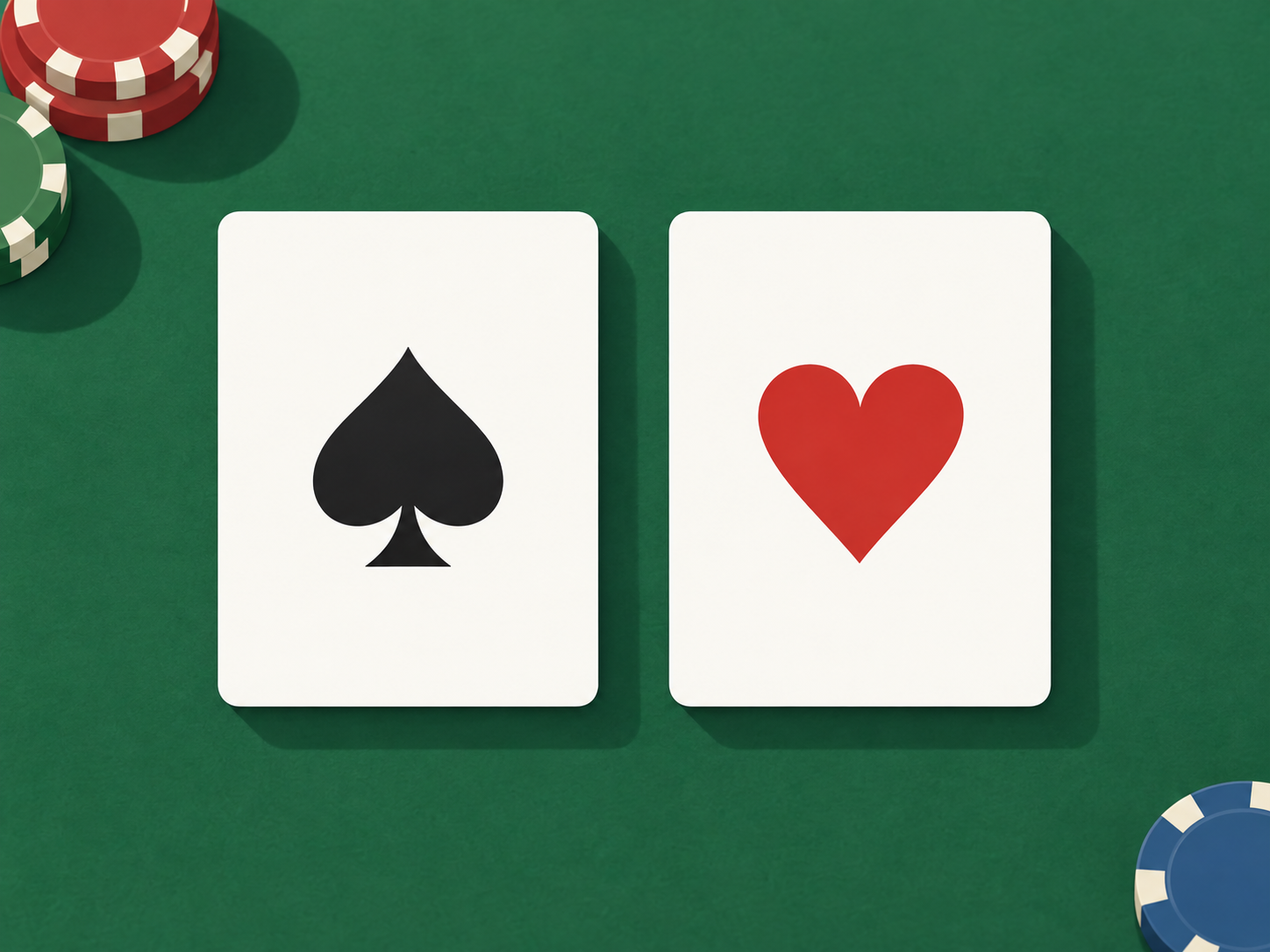
Illustration.
The math
- There are 1,326 possible two-card starting hands: 52 choices for the first card, 51 for the second, divided by 2 because the order doesn't matter. 52 x 51 / 2 = 1,326.
- Only 6 of those hands are two aces: with 4 aces in the deck, there are 4 x 3 / 2 = 6 ways to pick a pair of them.
- 6 out of 1,326 is 0.45%, or about 1 in 221. At a live table dealing 30 hands an hour, that's pocket aces once every seven hours or so.
- When the money goes in before the flop against one random hand, aces win about 85% of the time. Against two random hands it drops to about 73%, and against three, about 64%.
Why it matters
Even the best hand in poker loses about once in six heads-up. When your aces get cracked, that isn't a curse. It's the other 49 cards collecting their share.
2. Flopping a pair
32.4% of flops
You look down at two unpaired cards, like king-jack, and the dealer spreads the flop. How often does at least one of your cards pair up?
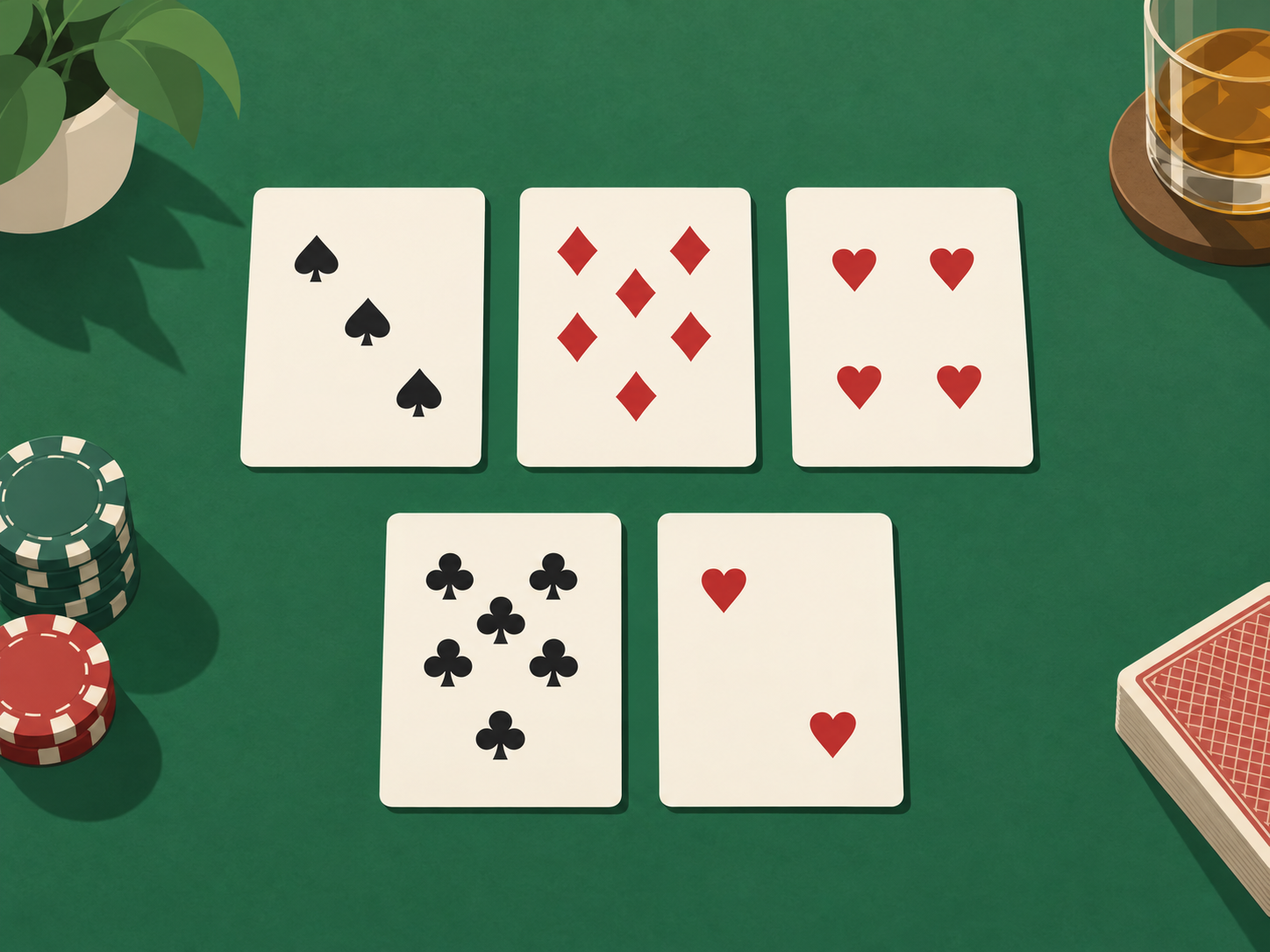
Illustration.
The math
- You've seen your 2 cards, so the flop is 3 cards drawn from the 50 you haven't seen. That gives 50 x 49 x 48 / 6 = 19,600 possible flops.
- 6 cards left in the deck match your two ranks (3 of each). The other 44 cards miss you completely.
- Flops that miss you entirely: 44 x 43 x 42 / 6 = 13,244 out of 19,600, or 67.6%.
- So the flop pairs at least one of your cards 100 - 67.6 = 32.4% of the time. About one flop in three.
Why it matters
Two unpaired cards miss the flop twice as often as they hit it. That's why "I had two overs" is a reason to fold far more often than a reason to stay.
3. The flush draw
35% by the river
The flop gives you four cards of one suit and you need one more. Here is the real chance it comes.
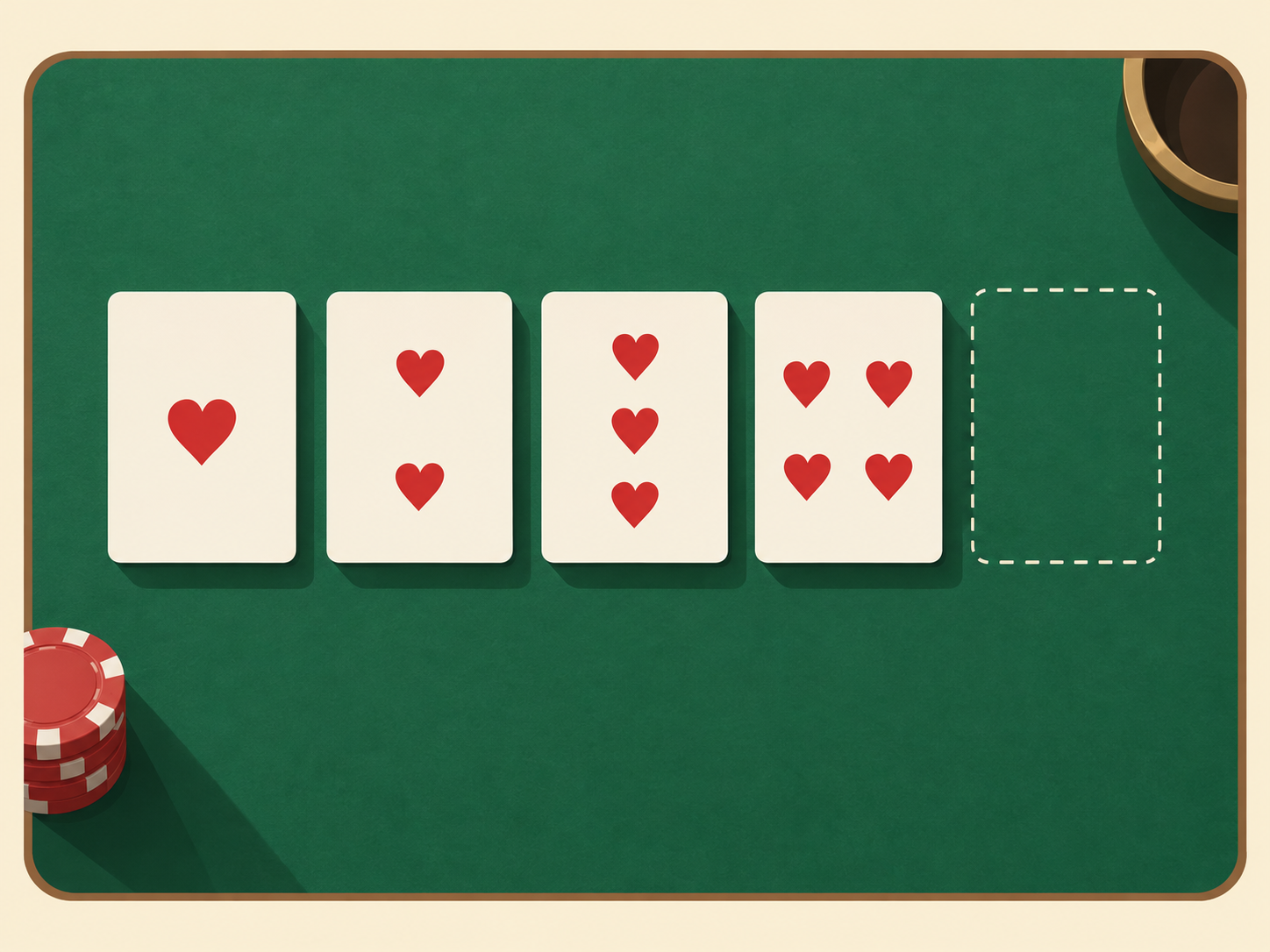
Illustration.
The math
- There are 13 cards in a suit. You can see 4 of them, so 9 flush cards remain among the 47 cards you haven't seen. Those 9 are your outs.
- The turn card alone makes your flush 9 out of 47 times: 19.1%.
- Missing both times means missing the turn and then the river: 38/47 x 37/46 = 65.0%.
- So the flush arrives by the river 100 - 65.0 = 35.0% of the time, a bit better than 1 in 3. The table shortcut: 9 outs x 2 cards to come x 2 = about 36%. Close enough.
Why it matters
A flush draw is a strong draw, not a made hand. Two times out of three, the river brings something else.
4. 16 against a 10
You bust 61.5% of hits
You're holding 16 and the dealer shows a 10. Every option feels bad, because every option is bad. Here is how bad, exactly.
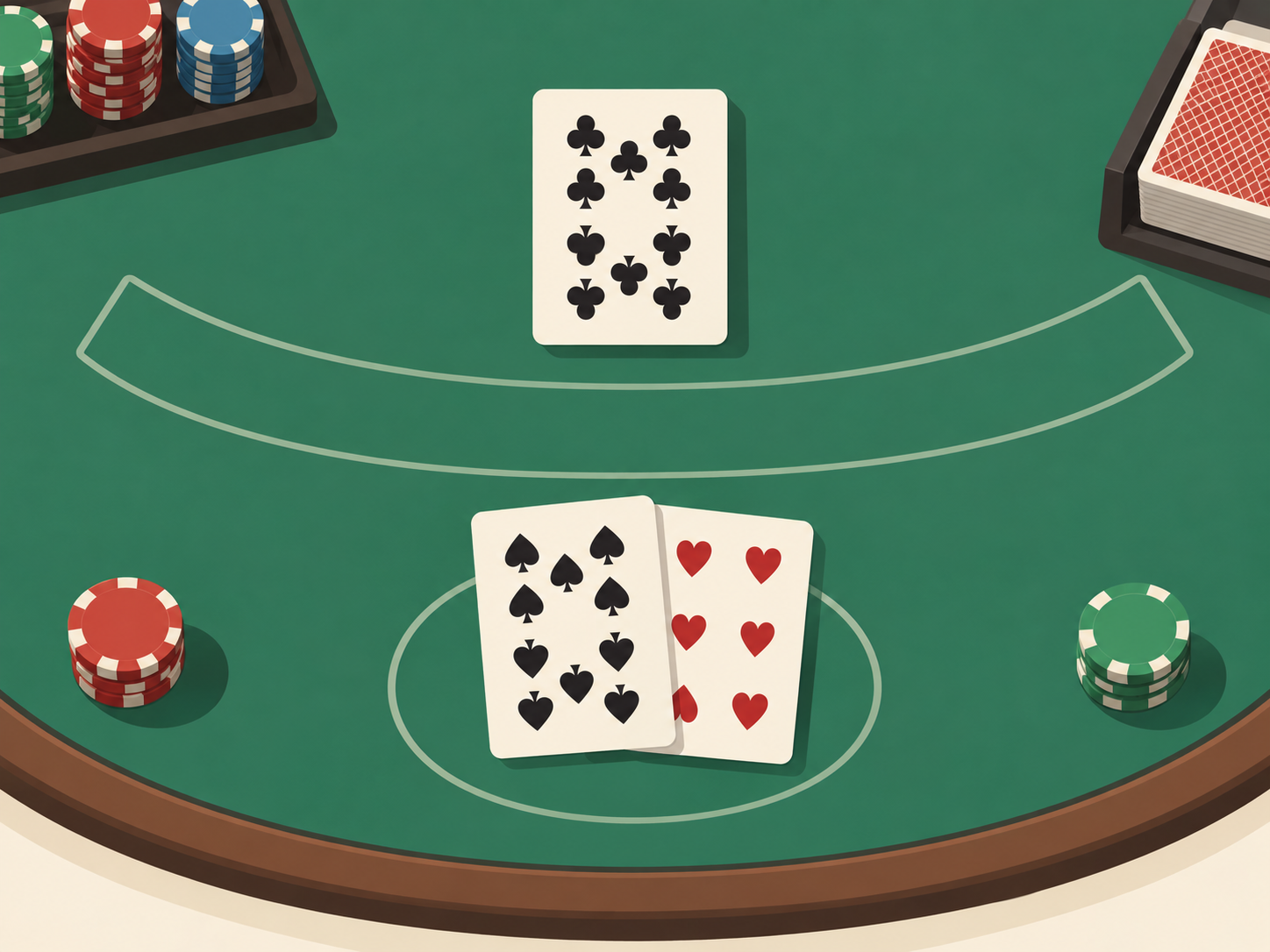
Illustration.
The math
- If you hit, 8 of the 13 possible ranks (6 through king) put you over 21. You bust 8 out of 13 times: 61.5%.
- If you stand, you only win when the dealer busts. With a 10 showing, the dealer busts about 23% of the time, roughly once in four (Wizard of Odds dealer tables, US rules).
- Standing wins about 23% of the time. Hitting wins a little more often, because the 5 safe ranks (ace through 5) give you a real chance to outdraw the dealer.
- Basic strategy says hit. Not because hitting is good, but because it loses less.
Why it matters
16 against a 10 is a damage-limitation hand. You're not choosing between winning and losing. You're choosing between losing a little and losing a lot.
5. The pass line
Wins 49.29% of the time
The pass line in craps is as close to a coin flip as a casino ever offers. The gap between it and a real coin flip is exactly where the house lives.
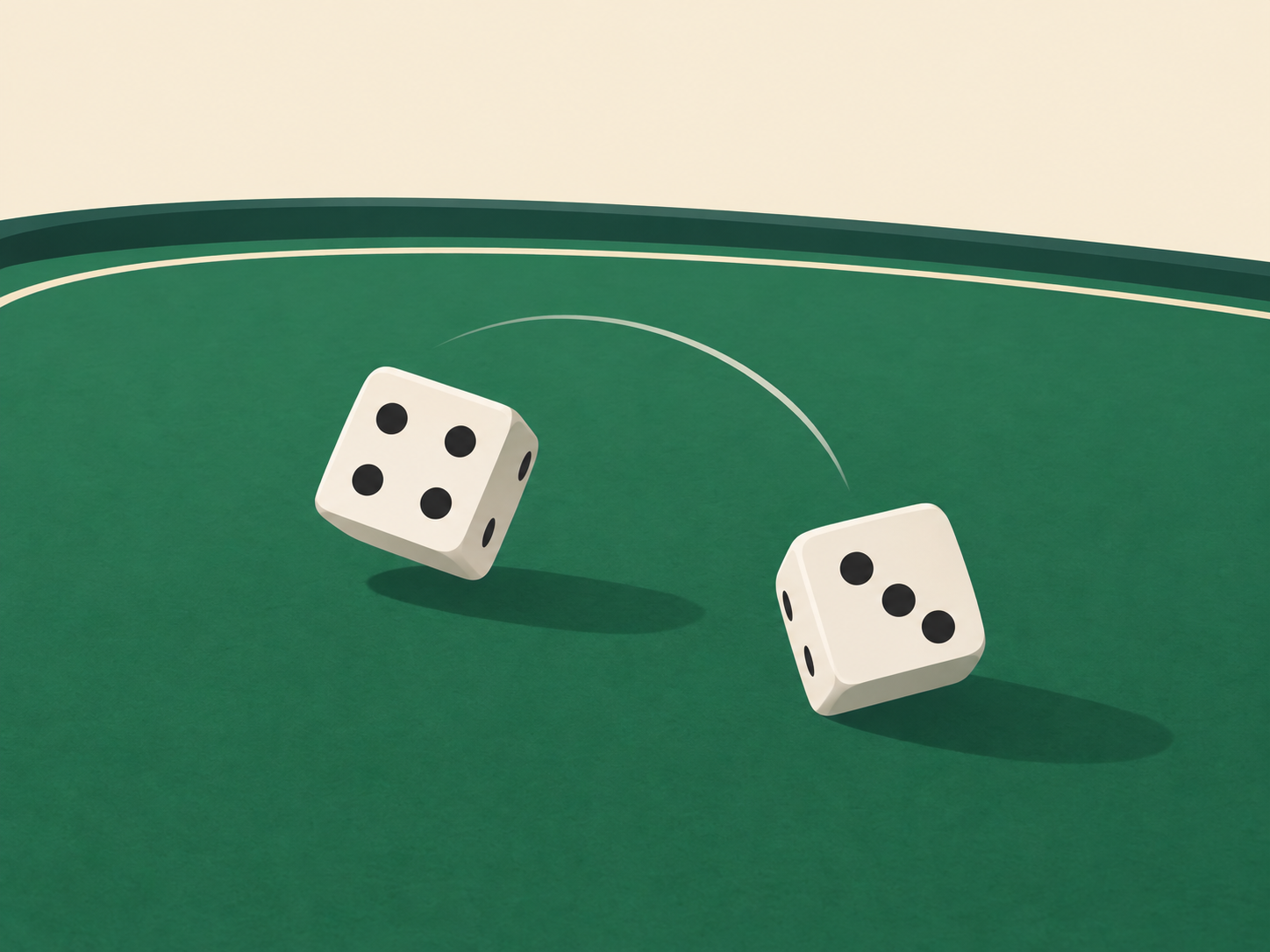
Illustration.
The math
- On the first roll you win with a 7 or 11. Of the 36 ways two dice can land, 6 make a 7 and 2 make an 11: 8 winning ways.
- You lose on the spot with a 2, 3, or 12: 1 + 2 + 1 = 4 losing ways.
- The other 24 rolls set a point, and now you're rolling that number again before a 7 shows up. Some points are easy, some are hard, and each has its own little fraction.
- Add every path together and the bet wins 244 times out of 495: 49.29%. The house edge is the missing sliver, 7 out of 495, about 1.41 cents per dollar.
Why it matters
49.29% is the friendliest number in the building, and it still isn't 50. Even the fairest bet in the casino isn't fair.